

Mackerel, seabuckthorn kosho and Dutch ikura
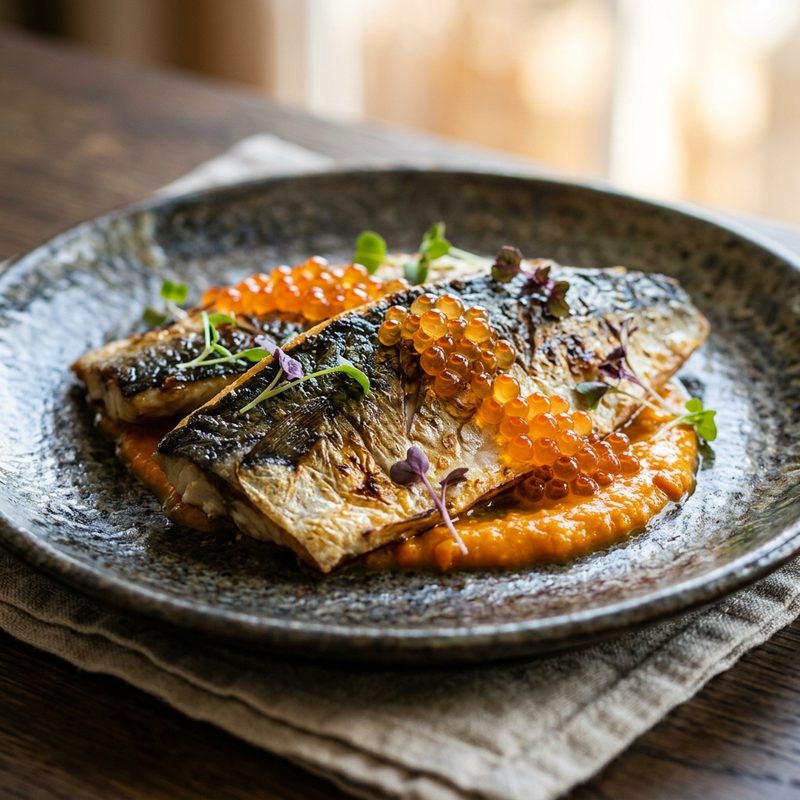
This sophisticated starter pairs the oily richness of fresh mackerel with a vibrant, fermented seabuckthorn kosho that cuts through the fat with citrusy heat. Finished with the briny pop of Dutch ikura, it is a masterclass in modern coastal cuisine.
Prep
45m
Cook
5m
Serves
4
1 Ingredients
| Qty | Ingredient |
|---|---|
| 2 large 400 g | Fresh mackerel fillets, pin-boned |
| 0.25 cup 60 g | Sea salt for curing |
| 0.5 cup 120 ml | Rice vinegar |
| 0.5 cup 75 g | Seabuckthorn berries (fresh or thawed) |
| 2 whole 10 g | Green bird's eye chilies |
| 1 tsp 2 g | Zest of 1 yuzu or lime |
| 4 tbsp 60 g | Dutch ikura (Salmon roe) |
| 1 handful 5 g | Micro-cilantro or shiso buds |
| 1 tsp 5 ml | Neutral oil (for the torching) |
2 Method
Step 1. Prepare the mackerel by coating the skin side heavily with sea salt. Let it sit for 20 minutes to firm up. Rinse under cold water and pat dry. Submerge the fillets in rice vinegar for 10 minutes, then drain and pat dry again.
Step 2. Make the seabuckthorn kosho by blending the seabuckthorn berries, chilies, yuzu zest, and a pinch of salt until a coarse paste forms. For best results, let this ferment at room temperature for 24 hours in a sterilized jar, or use immediately for a fresher profile.
Step 3. Using a sharp sashimi knife, slice the mackerel fillets into 1-cm thick pieces.
Step 4. Lay the mackerel slices on a heatproof tray. Lightly brush the skin with neutral oil and use a kitchen blowtorch to sear the skin until charred and blistered. The flesh should remain mostly raw.
Step 5. To plate, place three or four slices of mackerel on each dish. Dot small amounts of the seabuckthorn kosho along the fish.
Step 6. Carefully spoon the Dutch ikura over and around the mackerel.
Step 7. Garnish with micro-cilantro or shiso buds and serve immediately.
💡 Chef's Tips
-
·
Ensure the mackerel is sashimi-grade as the interior remains raw.
-
·
If you cannot find fresh seabuckthorn, high-quality frozen berries work perfectly for the kosho.
-
·
Dutch ikura is prized for its clean, salty finish; keep it chilled until the very moment of serving to maintain texture.
-
·
Use a very sharp knife to slice the fish to prevent tearing the delicate skin.
Be the first to leave a comment.